
Many people want to refresh an old finish without stripping everything back to bare metal. Powder coating over an existing powder coat seems like an easy shortcut — but is it actually possible?
Yes, you can powder coat over powder coat. The key is proper surface preparation: sanding, cleaning, and choosing the right powder system. When the surface is prepared correctly, the new layer bonds very well.
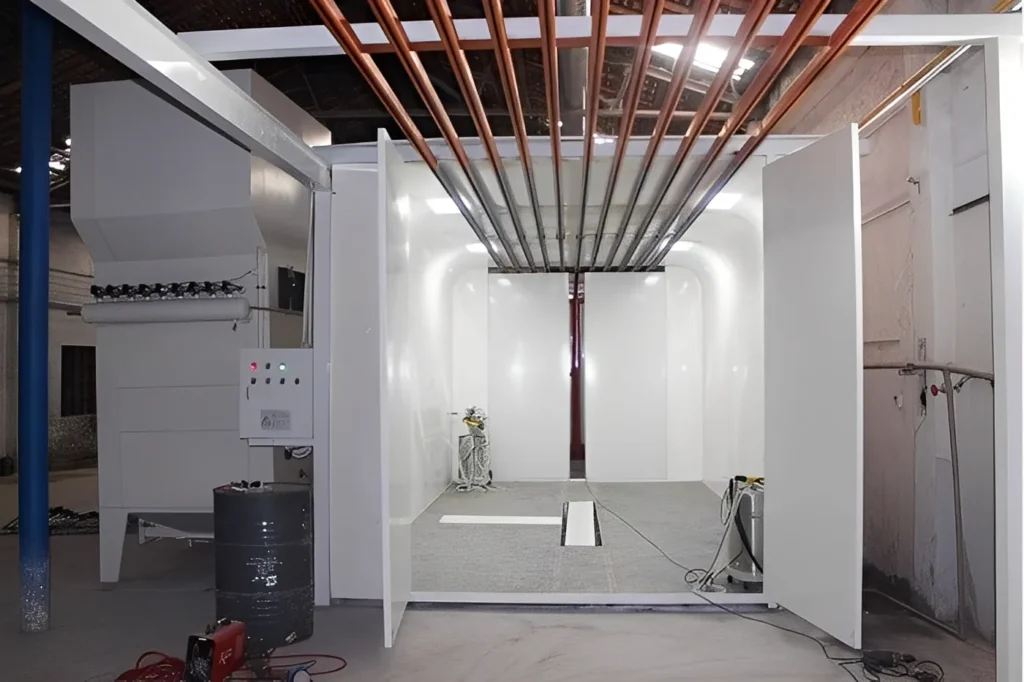
I have worked with many manufacturers who recoat old industrial frames, wheels, and metal furniture. Recoating can save time and cost, but only if the old coating is stable and the prep work is done properly.
Can you apply new powder coating on top of old powder coating?
The short answer is yes — but only under the right conditions.
You can recoat powder if the original layer is fully cured, not peeling, and properly sanded to create mechanical grip.
Dive Deeper: Why a second coat can stick (200+ words)
Powder coating bonds mainly through two mechanisms:
- Mechanical adhesion (surface roughness)
- Chemical crosslinking (when coating is partially cured)
When the old powder coat is fully cured, chemical bonding is not possible. This means the new layer must rely on mechanical adhesion, which requires sanding or blasting to create a rough surface.
If the old surface is glossy or smooth, the new powder will not stick and can peel away.
If the old coating is damaged, peeling, or bubbling, the defects will continue to spread under the new layer.
In contrast, if the old coating is:
- Solid
- Well-adhered
- Not chalking
- Not too thick
- Uniform after sanding
Then a new layer can bond strongly and deliver a long-lasting finish.
| Condition | Can Recoat? | Notes |
|---|---|---|
| Strong, solid, fully cured coating | Yes | Sand or scuff first |
| Light scratches only | Yes | Easy to recoat |
| Peeling or flaking | No | Must strip first |
| Thick layers (> 6–8 mils) | Not recommended | Risk of cracking |
| Unknown or cheap powder | Caution | Test adhesion |
Recoating is possible — but preparation decides success.
How do you powder coat over existing powder coat?
To apply new powder on top of old powder, you must prepare the surface so it accepts a new layer.
Correct method: clean → sand → clean again → spray → cure.
Dive Deeper: Step-by-step recoating process (200+ words)
Below is the standard industrial process for recoating:
1. Clean the surface
Remove:
- Oil
- Grease
- Dirt
- Brake dust
- Chemicals
Use degreaser or solvent cleaners. Any contamination will prevent adhesion.
2. Sand or scuff the old coating
This is the most important step.
Create a uniform matte surface using:
- 180–320 grit sandpaper
- Scotch-Brite pads
- Sandblasting (best option for durability)
The goal is to break the glossy surface and expose micro-scratches for the new powder to grip.
3. Repair defects
If there are chips or deep scratches:
- Feather the edges
- Remove loose coating
- Fill-in low areas with metal filler (if needed)
Recoating does not fix underlying damage — fix before spray.
4. Clean again
After sanding, remove dust completely:
- Air blow-off
- Wipe with cleaner
- Allow to dry
Dust trapped under powder causes bumps and weak adhesion.
5. Apply the new powder
Spray normally, but keep in mind:
- Lower voltage (35–55 kV) helps avoid back-ionization
- Avoid too much thickness
- Ensure grounding is strong
Spraying thick over an old coating can cause orange peel or poor flow-out.
6. Cure properly
Follow the powder manufacturer’s metal-temperature curve.
Overbaking can damage the old layer; underbaking weakens both layers.
When should you NOT powder coat over powder coat?
Recoating is not appropriate for every situation.
You should NOT apply powder over powder when:
- The old coating is peeling
- The coating has corrosion underneath
- Layers are too thick
- The surface has major defects
- The previous powder is unknown or low-quality
- The part requires a super smooth finish
Dive Deeper: Why sometimes stripping is necessary (200+ words)
If the old powder coating is lifting or bubbling, a new layer will not stop the failure. Powder coating fails because moisture or corrosion moves under the coating. Adding another layer often traps the problem and accelerates the damage.
Thick powder layers can also create problems:
- Poor flow
- Orange peel
- Cracking
- Reduced flexibility
- Poor edge coverage
In precision finishing applications (automotive show-quality, architectural aluminum), stripping and starting from bare metal is the best choice.
Stripping methods include:
- Chemical stripping tank
- Burn-off oven
- Media blasting
Although stripping requires more labor, it ensures the new coating bonds correctly and lasts many years.
Is powder coating over powder coat durable?
Yes — when properly prepared.
A well-prepared recoated part can last nearly as long as a single-layer powder coat.
Dive Deeper: How durability compares (200+ words)
Durability depends on:
- Surface prep quality
- Powder type
- Layer thickness
- Proper curing
- Environmental exposure
When done correctly, a recoated powder layer can resist:
- Corrosion
- Abrasion
- Sunlight
- Chemicals
- Impacts
Almost as well as a new single-layer coating.
However:
- If prep is poor → peeling is likely
- If layers are thick → chipping increases
- If curing is wrong → adhesion fails
Industrial factories often recoat equipment frames and metal racks several times during their lifetime, proving that recoating is reliable when done properly.
Conclusion
Yes, you can powder coat over an existing powder coat. The key to success is proper preparation: sanding, cleaning, and applying the new layer with controlled settings. When done right, a recoated part is durable, attractive, and long-lasting.
 English
  Malay
Malay  Indonesian
  Russian
  Spanish
  Vietnamese
  Bosnian
  French
  Japanese