
Powder coating is strong, durable, and chemically resistant — which is great until you need to remove it. Many people try sanding or scraping and soon realize the coating is too tough for simple methods.
You can strip powder coat using chemical stripping, media blasting, heat stripping, or a burn-off oven. The best method depends on the metal type, coating thickness, and available equipment.
I have helped many factories and hobbyists remove powder coating from wheels, frames, industrial parts, and aluminum components. Once you understand the differences between each method, stripping becomes much easier and safer.
What is the best way to strip powder coating?
There is no single “best” way. Instead, each method works best in different situations.
The main methods are: chemical stripping, sand/media blasting, heat stripping with a torch, and industrial burn-off ovens.
Dive Deeper: Why powder coat is so difficult to remove (200+ words)
Powder coating is strong because it forms a crosslinked thermoset polymer. When baked at 160–200°C, the powder chemically reacts into a solid, permanent layer. This means:
- It cannot be dissolved easily
- It does not melt at low heat
- It resists abrasion
- It bonds tightly to metal
Because of this, traditional paint removers often fail. Even aggressive sanding takes a long time.
These characteristics mean powder coat must be removed by breaking its structure, not simply softening it.
Each stripping method attacks the coating in a different way:
- Chemical strippers break the polymer structure
- Media blasting physically crushes and erodes the coating
- Heat stripping decomposes the coating so it flakes off
- Burn-off ovens carbonize the coating for industrial-scale removal
Understanding these mechanisms helps you choose the safest and fastest way to remove powder coat from any metal.
| Method | Strength | Weakness |
|---|---|---|
| Chemical | Fast, no metal damage | Requires ventilation |
| Blasting | Clean finish | Can warp thin metal |
| Heat | Cheap | Risk of overheating |
| Burn-off oven | Best for bulk parts | Industrial use only |
Method 1: Chemical stripping (most effective for home and shop use)
Chemical strippers dissolve the powder so it can be scraped off easily. This is the most common method for:
- Wheels
- Motorcycle parts
- Small frames
- Brackets
- Aluminum parts
Chemical stripping is one of the easiest and safest ways to remove powder coat.
Dive Deeper: How to use chemical stripper correctly (200+ words)
Here is the basic process:
1. Apply the chemical stripper
Use a powder-coat-compatible chemical remover. Some common types include:
- Methylene chloride–based strippers (fastest)
- Caustic-based (safer but slower)
- Powder-coating-specialty strippers
Apply with a brush or spray.
2. Let it react
Reaction time varies from 5 minutes to several hours depending on:
- Coating type
- Coating thickness
- Chemical strength
You will see bubbles, lifting, or wrinkling.
3. Scrape or brush the coating off
Use:
- Plastic scraper
- Wire brush
- Nylon brush
Stubborn areas may need a second application.
4. Rinse and neutralize
Use:
- Water
- Soap
- Pressure washer (best option)
Neutralize chemical residue before blasting or refinishing.
Safety notes
- Always wear gloves and eye protection
- Work outdoors or in a ventilated space
- Never mix different chemical strippers
Chemical stripping is fast, efficient, and preserves the metal surface perfectly.
Method 2: Media blasting (best for durable metals)
Media blasting removes powder coating using high-speed abrasive particles. It is ideal for:
- Steel
- Iron
- Heavy-duty parts
- Rust removal combined with stripping
Media blasting is powerful but requires the right media type and pressure.
Dive Deeper: Blasting choices and risks (200+ words)
Media blasting options include:
- Aluminum oxide
- Garnet
- Crushed glass
- Glass bead
- Walnut shell (gentle)
- Plastic media (gentle but slow)
Correct pressure is important:
- Steel: 60–90 psi
- Aluminum: 30–50 psi (too high may warp it)
Advantages:
- Removes rust at the same time
- Leaves a clean, paint-ready finish
- Great for complex shapes
Disadvantages:
- Can warp thin aluminum
- Creates dust
- Requires equipment
For aluminum wheels or thin sheet metal, blasting must be done carefully to avoid damage.
Method 3: Heat stripping with a torch (cheap DIY method)
Using a propane torch or heat gun, you can heat the coating until it softens or carbonizes. Then the coating flakes off with a scraper.
Heat stripping works best on thick steel parts, not aluminum.
Dive Deeper: How heat stripping works (200+ words)
Thermal decomposition starts around 250–400°C.
When heated:
- The coating swells
- Loses adhesion
- Turns brittle
- Becomes easy to scrape
Steps:
- Heat a small section at a time
- Scrape while hot
- Repeat until clean
- Sand or blast lightly for final prep
Risks:
- Overheating can warp metal
- Produces smoke and fumes
- Requires protective gear
This method is inexpensive but requires patience.
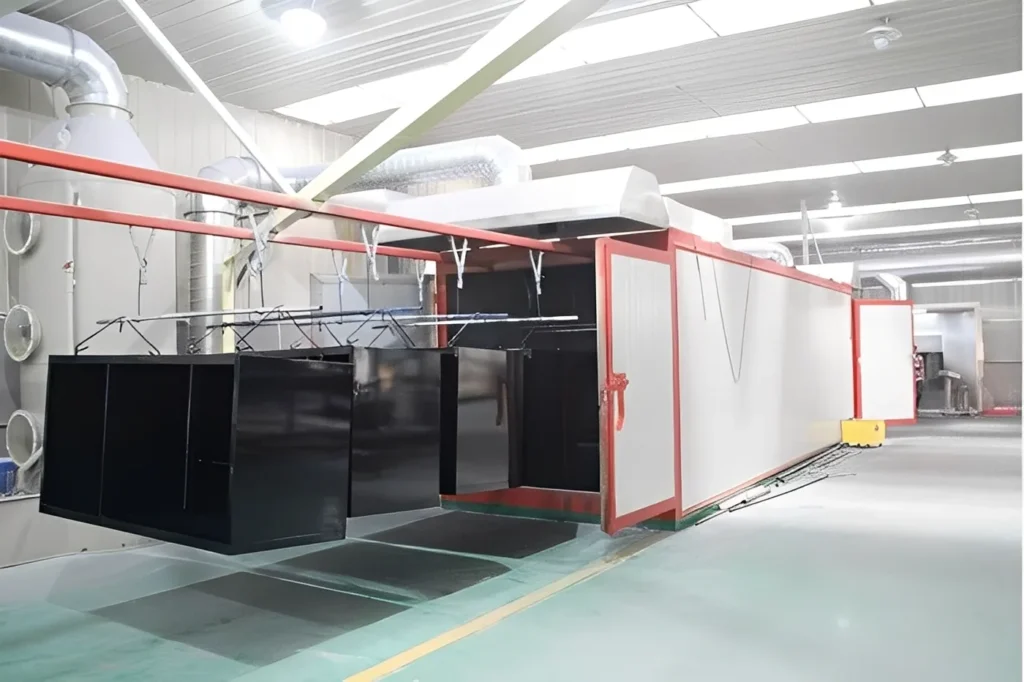
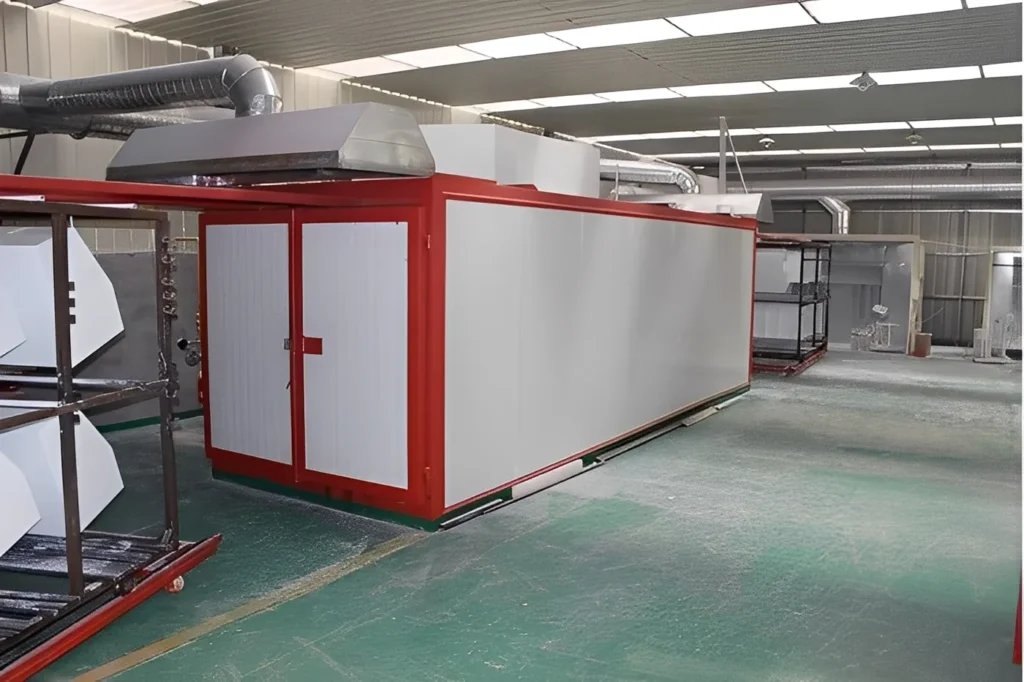
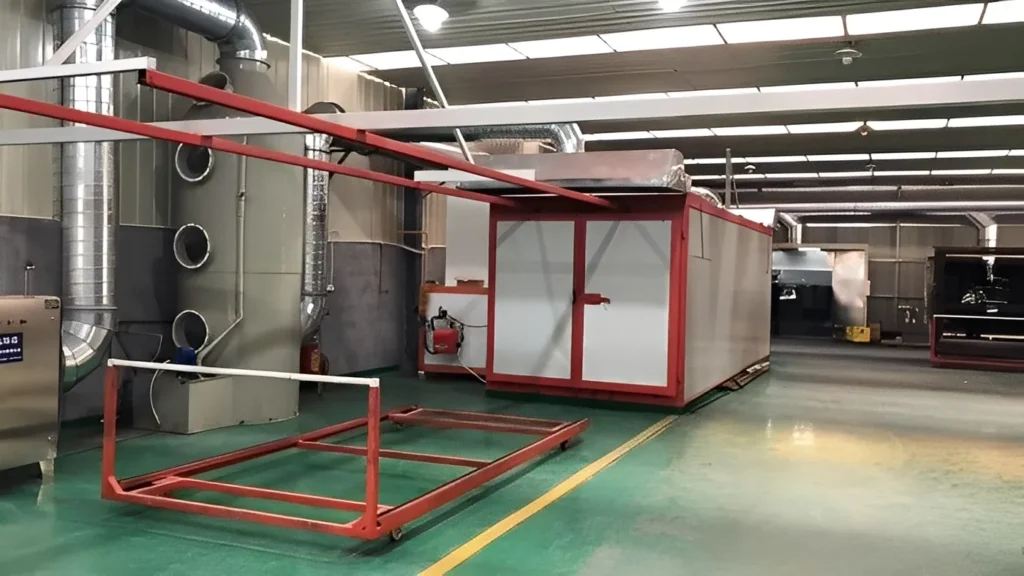
Method 4: Burn-off oven (industrial method)
Burn-off ovens heat parts to 350–450°C, turning powder coat into ash that can be brushed off easily. These are used for:
- Factories
- Wheel shops
- Large production facilities
This is the fastest way for bulk stripping.
Dive Deeper: Why factories use burn-off ovens (200+ words)
Industrial ovens use controlled heat to:
- Carbonize powder coating
- Avoid metal warping
- Minimize environmental impact
- Allow quick turnaround
A full batch of parts can be cleaned in under an hour. After burning, parts are often media blasted to remove ash.
Pros:
- Very fast
- No chemicals
- Handles large volumes
Cons:
- Not suitable for aluminum unless temperature is controlled carefully
- Only available in industrial shops
How to choose the right powder coat stripping method?
Here is a simple guide:
| Situation | Best Method |
|---|---|
| Aluminum wheels | Chemical stripping |
| Steel frames | Blasting or heat |
| Small brackets | Chemical |
| Large batches | Burn-off oven |
| Thin sheet metal | Chemical only |
| Rust + powder coat | Blasting |
Think about:
- Metal type
- Safety
- Cost
- Tools available
- Part size
Conclusion
You can strip powder coating using chemical strippers, blasting, heat, or industrial burn-off ovens. The right method depends on the metal, coating thickness, and your equipment. With proper technique, powder coat removal is safe, efficient, and prepares the part perfectly for refinishing.
 English
  Malay
Malay  Indonesian
  Russian
  Spanish
  Vietnamese
  Bosnian
  French
  Japanese