
People see the phrase “powder coated” on metal furniture, wheels, appliances, and industrial equipment every day. It suggests strength, durability, and premium quality. But what does “powder coated” actually mean?
Powder coated means the surface has been finished with a dry powder that is electrostatically applied and then oven-cured to create a hard, protective, and durable coating.
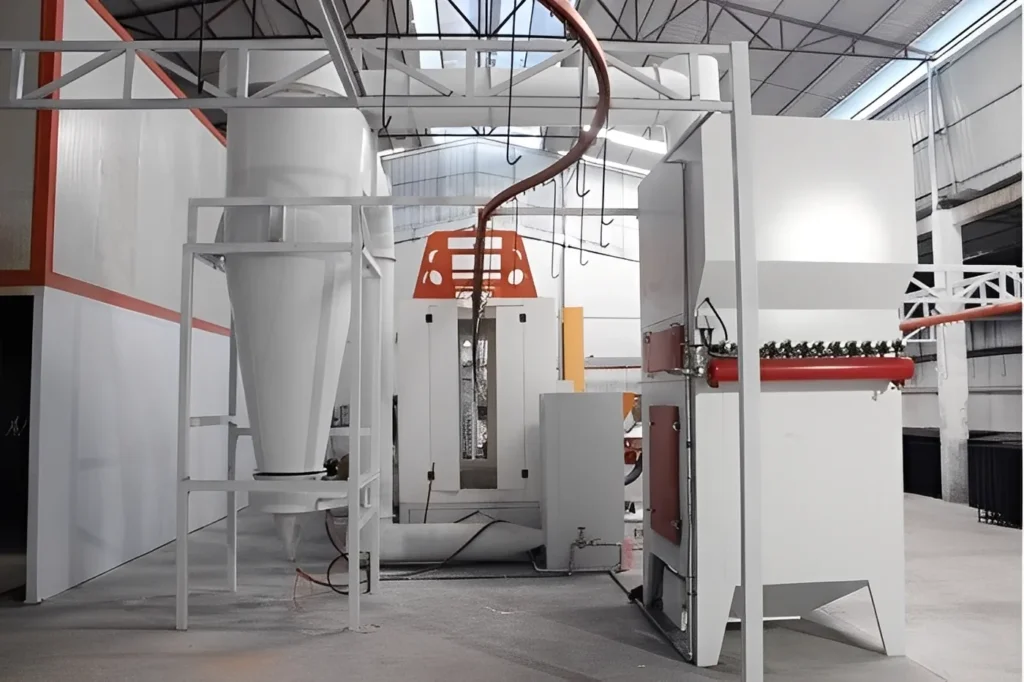
In my work with factories and engineers, powder coating has consistently delivered one of the strongest and longest-lasting metal finishes. When a product is labeled “powder coated,” it means it went through a high-performance industrial finishing process.
What does “powder coated” mean?
When something is described as powder coated, it means a layer of dry powder was sprayed onto the metal using static electricity, and then baked until it melted and formed a solid protective film.
Powder coated = static electric powder application + heat curing = strong, uniform coating.
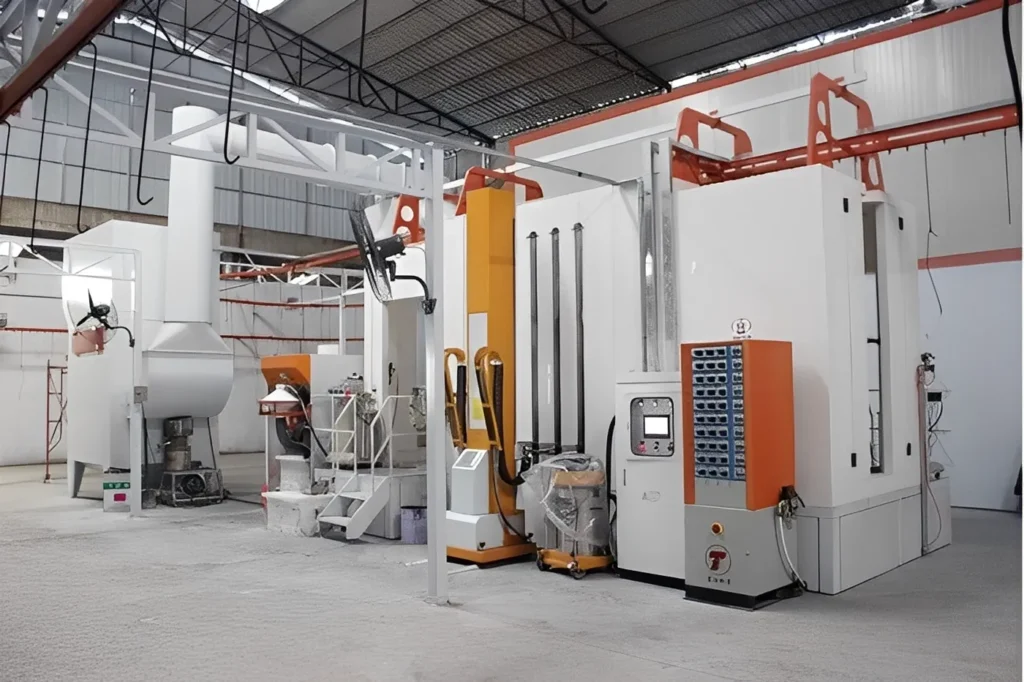
Dive Deeper: The science behind a powder coated finish (200+ words)
Powder coating is a “dry finishing process.” Instead of using liquid paint, technicians spray a fine powder made from resin, pigments, and additives. This powder becomes charged as it leaves the spray gun, while the metal part is grounded. The charged powder clings to the surface like a magnet.
Once coated, the part is placed into an oven. At 160–200°C, the powder melts, flows into a smooth film, and chemically crosslinks. This crosslinking forms a thermoset polymer, which is extremely durable and stable.
This process creates a finish that is:
- heavier than liquid paint
- more resistant to corrosion
- harder to scratch
- more resistant to chemicals
- UV-stable for outdoor use
- uniform without runs or drips
Powder coated surfaces are common because they offer long-lasting performance with minimal maintenance.
| Feature | What Powder Coating Provides |
|---|---|
| Thickness | 2–4× thicker than paint |
| Durability | High impact and scratch resistance |
| Corrosion protection | Excellent barrier layer |
| Appearance | Smooth, uniform finish |
| Environmental impact | Zero solvents, no VOCs |
What does powder coating do for metal?
Powder coating provides both protection and beauty.
It prevents rust, increases durability, and enhances appearance with smooth, consistent color and texture.
Dive Deeper: Why powder-coated metal performs so well (200+ words)
Metal is vulnerable to corrosion, scratches, and weather. Powder coating solves these issues with a strong barrier layer that blocks moisture and oxygen.
The cured coating performs like a tough shell. It protects metal by:
- isolating it from the environment
- resisting humidity, rain, and salt
- preventing rust formation
- absorbing impact without cracking
- maintaining color under UV exposure
Powder-coated metal lasts significantly longer than painted metal. In many industrial environments, the coating can survive 10–20 years outdoors and even longer indoors.
Another advantage is flexibility. Powder coating can bend slightly with the metal without chipping. Many wet paints crack under repeated stress, but powder coatings stay bonded.
Because of these benefits, powder-coated metal is used in:
- automotive parts
- door and window frames
- industrial machines
- construction materials
- bicycles and motorcycles
- metal cabinets and racks
It is one of the most reliable finishes for metal products exposed to heavy use.
What does powder coating look like?
Powder coating offers a clean, attractive, uniform finish that often looks more premium than wet paint.
Powder-coated surfaces can be matte, gloss, textured, metallic, or custom-colored, depending on the powder used.
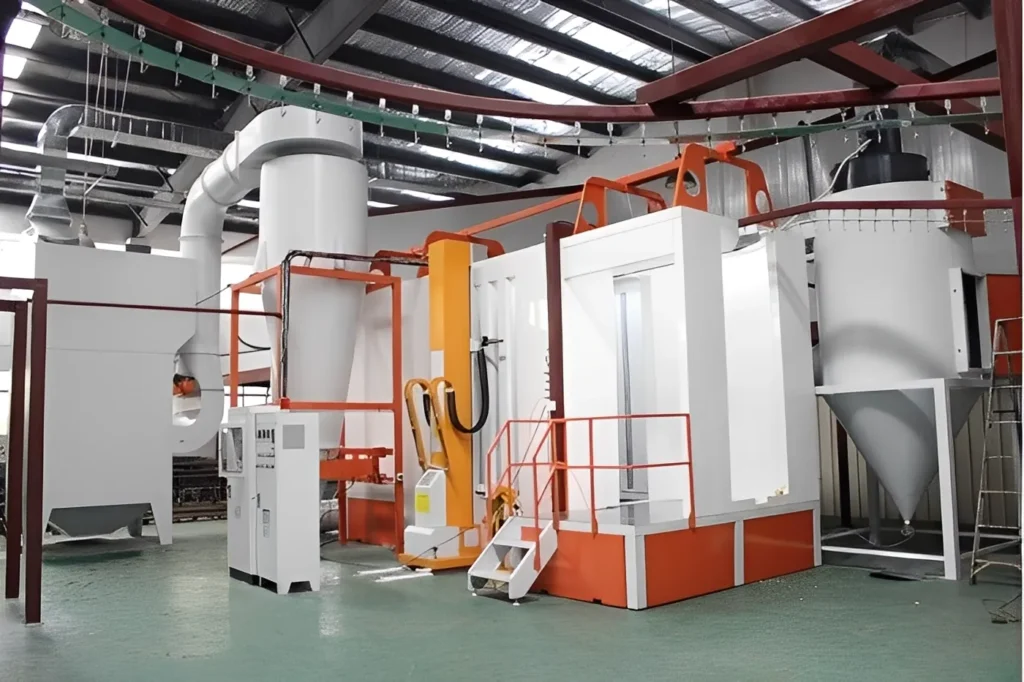
Dive Deeper: Why powder coat aesthetics stand out (200+ words)
Powder coating can achieve finishes that liquid paint struggles to match. Because powder melts into a single seamless layer, you avoid:
- streaks
- runs
- brush marks
- drips
- uneven areas
This makes powder coating ideal for visible parts such as:
- furniture frames
- wheels
- outdoor lighting
- appliances
- gym equipment
Powder coating also offers many textures and effects, such as:
- sand texture
- wrinkle finish
- hammer tone
- metallic flake
- ultra-matte
- high gloss
The finish is not only attractive but also highly consistent. When a factory coats thousands of parts, each one looks nearly identical. This uniformity is a major reason why powder coating is popular in mass production.
Many powder-coated surfaces also feel pleasant to the touch, with smoother or more refined textures than liquid paint.
What items are commonly powder coated?
Powder coating is used across many industries because of its durability and versatility.
Most powder-coated items are metal products that need long-term protection and performance.
Dive Deeper: Industries and products that depend on powder coating (200+ words)
Common powder-coated items include:
- Automotive: wheels, frames, brackets, engine covers
- Construction: window profiles, handrails, fencing, outdoor structures
- Appliances: refrigerators, washer/dryer panels, oven parts
- Furniture: chairs, tables, racks, shelves
- Industrial equipment: machine frames, electrical cabinets, toolboxes
- Sports equipment: bicycles, gym machines, metal accessories
Why these industries choose powder coating:
- Outdoor durability
- Excellent corrosion protection
- Good edge coverage
- Impact resistance
- Color stability
- Attractive appearance
- Fast curing time in production
Powder-coated parts stay clean, resist scratches, and keep their color longer than painted parts. For manufacturers, this reduces warranty issues and maintenance costs.
Why choose powder coating instead of painting?
Powder coating offers advantages that traditional liquid paint cannot match:
- No solvent fumes
- No runs or drips
- Better adhesion
- Higher durability
- More consistent coverage
- Thicker, tougher coating
- Longer outdoor lifespan
- More finish options
- Lower maintenance costs
While it requires an oven and cannot be used on heat-sensitive materials, powder coating is usually the superior choice for metal parts.
Conclusion
“Powder coated” means a surface has been finished with electrostatically applied powder that is baked into a hard, durable, protective layer. Powder coating improves corrosion resistance, appearance, and longevity, making it one of the strongest and most reliable finishing methods in modern manufacturing.
 English
  Malay
Malay  Indonesian
  Russian
  Spanish
  Vietnamese
  Bosnian
  French
  Japanese