
Powder coating is known for being thicker and more protective than liquid paint. Many engineers and buyers want to know the exact film thickness so they can evaluate durability, appearance, and long-term performance.
Typical powder coating thickness ranges from 2–5 mils (50–125 microns). Some heavy-duty coatings can reach 6–12 mils (150–300 microns) depending on the application.
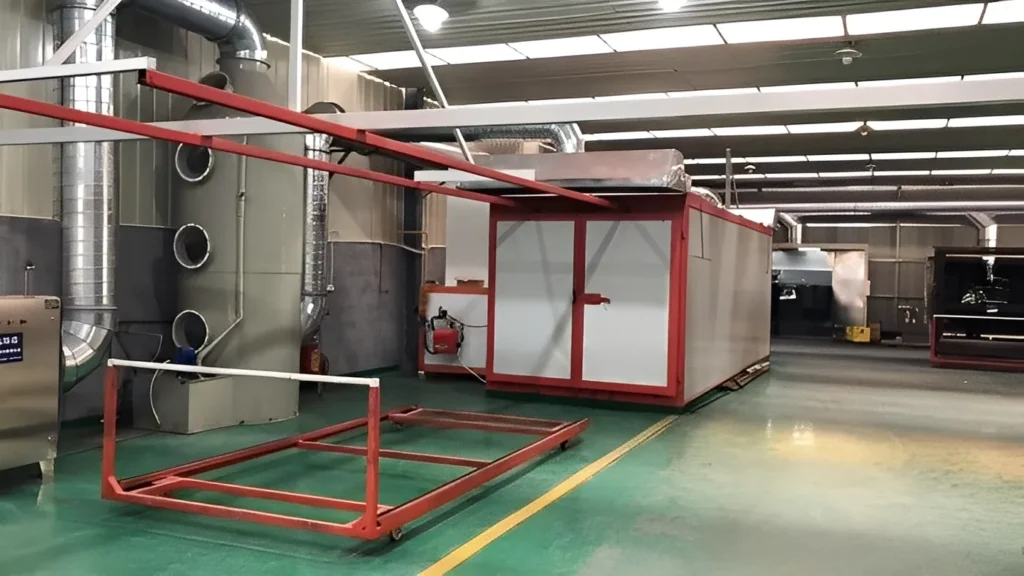
In factory projects I have worked on, film thickness is one of the most important quality-control points. Too thick, and the coating may crack. Too thin, and it loses protection.
What is the standard thickness of powder coating?
For most industrial and architectural applications:
Standard powder coating thickness = 60–120 microns (2.5–4.5 mils).
Dive Deeper: Why this thickness range is used (200+ words)
The 60–120 micron range is ideal because it balances:
- Durability
Enough barrier protection to resist corrosion and wear. - Flexibility
Powder coatings can crack if applied too thick. - Smooth appearance
Proper thickness reduces orange peel and texture issues. - Cost efficiency
Thicker coatings use more powder and require more curing energy.
Most factories use powder coating for:
- aluminum profiles
- steel frames
- automotive parts
- outdoor furniture
- appliances
These products need long-term protection without adding unnecessary thickness.
If the film is too thin (below 50 microns), common problems include:
- weak corrosion resistance
- thin edge coverage
- visible metal shadows
- poor durability
If the film is too thick (above 150 microns), issues include:
- cracking
- poor adhesion
- orange peel texture
- uneven flow
This is why quality-controlled production always targets the standard range.
| Thickness | Microns | Use Case |
|---|---|---|
| Thin | 30–60 μm | Indoor decorative parts |
| Standard | 60–120 μm | Most metal products |
| Heavy | 120–300 μm | High-wear or outdoor protection |
How thick should powder coating be for outdoor use?
Outdoor products require stronger weather and corrosion protection.
Ideal outdoor powder coat thickness: 70–120 microns (3–5 mils).
Dive Deeper: Why outdoor coatings need higher thickness (200+ words)
Outdoor environments expose metal to:
- UV light
- rain
- humidity
- salt spray
- temperature changes
- physical abrasion
A thicker powder coating provides:
- stronger corrosion resistance
- better edge protection
- longer color stability
- improved barrier against moisture
For example:
- Gates and fences → 80–120 μm
- Bike frames → 70–110 μm
- Aluminum window frames → 60–100 μm
- Outdoor furniture → 80–120 μm
Outdoor-grade polyester powders are usually chosen because they maintain color and gloss for many years.
In harsh coastal areas, engineers often use:
- zinc primer (50–70 μm) +
- polyester topcoat (70–100 μm)
This two-layer system can reach 120–180 μm and is extremely rust-resistant.
| Application | Recommended Thickness |
|---|---|
| Normal outdoor use | 70–120 μm |
| Coastal or industrial | 120–180 μm |
| Heavy corrosion areas | 150–250 μm |
How thick is powder coating for heavy-duty applications?
Some industries apply extra-thick coatings for extreme durability.
Heavy-duty powder coating thickness: 150–300 microns (6–12 mils).
Dive Deeper: When extra-thick coatings are needed (200+ words)
Thicker films are common in environments with high mechanical stress, such as:
- construction machinery
- mining equipment
- industrial tools
- transport racks
- agricultural equipment
- structural steel
These applications need:
- high abrasion resistance
- strong impact protection
- resistance to chemicals or saltwater
- long-term corrosion protection
Thicker powder coatings may use special formulations like:
- epoxy primer + polyester topcoat
- zinc-rich primer systems
- dual-coat hybrid systems
However, thick coatings require careful application because:
- very thick films can trap air and cause bubbles
- thick powder sometimes causes orange peel
- curing must be precise to avoid under-baking
Industrial customers often specify 150–250 microns for maximum corrosion resistance, especially for offshore or heavy chemical environments.
| Thickness | Level | Application |
|---|---|---|
| 120–180 μm | Heavy duty | Machinery, outdoor structures |
| 180–300 μm | Extreme duty | Marine, mining, industrial |
How is powder coating thickness measured?
There are two main tools:
1. Dry Film Thickness Gauge (DFT gauge)
Most common for steel and aluminum.
2. Micrometer or comb gauge
Used when DFT gauges cannot measure on non-metal surfaces.
Dive Deeper: Why accurate thickness measurement matters (200+ words)
Measuring powder coating thickness ensures:
- consistent quality
- surface durability
- proper corrosion resistance
- compliance with industry standards
Typical steps:
- Measure at least 5–10 points on the part.
- Avoid edges and corners during testing.
- Compare results with powder manufacturer specifications.
- Record data for quality control.
If thickness is too low:
- recoating may be required
- product durability decreases
If thickness is too high:
- curing defects appear
- fitment issues may occur
- coating may crack under stress
Most factories aim for ±10–15 microns of consistency.
Conclusion
Powder coating thickness typically ranges from 60–120 microns, but can vary depending on the application. Thin coatings are used for indoor products, standard coatings for general metal parts, and heavy-duty coatings for harsh environments. Correct thickness ensures durability, corrosion resistance, and long-term performance.
 English
  Malay
Malay  Indonesian
  Russian
  Spanish
  Vietnamese
  Bosnian
  French
  Japanese