
Powder coating is one of the most durable and professional ways to finish metal. Many factories and DIY users want a clean, consistent coating that lasts for years without fading or rusting. Powder coating makes that possible when the process is done correctly.
To powder coat metal, you must clean it, remove rust and oil, apply pretreatment, spray electrostatic powder, and then cure the coating in an oven at 160–200°C.
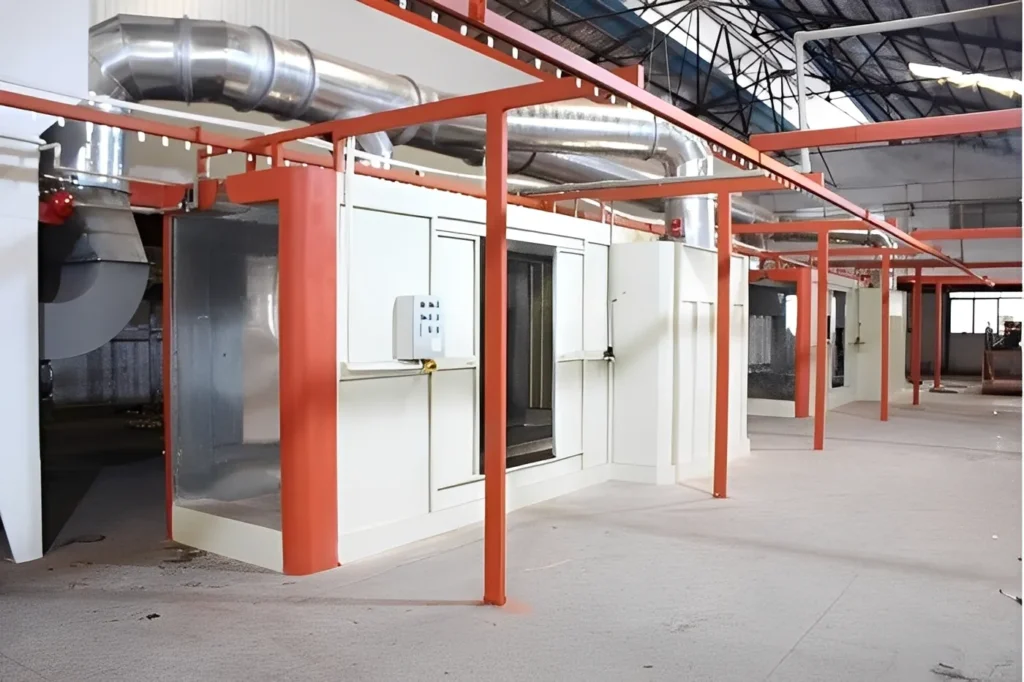
I have worked with many production lines and engineers to help them create a reliable powder coating workflow. The key is preparation—because even the best powder will fail if the metal surface is dirty.
What is the correct process for powder coating metal?
Powder coating metal requires a structured process that prepares, coats, and cures the part.
The correct process: clean → pretreat → dry → spray powder → cure → cool.
Dive Deeper: Why each step matters in powder coating (200+ words)
Every step in powder coating serves a purpose:
1. Cleaning removes oil and dirt
Metal arrives with fingerprints, machine oil, dust, and shop contaminants.
If not removed, powder will:
- fish-eye
- bubble
- peel
Solvent cleaning or alkaline degreasing is essential.
2. Rust and scale must be removed
Powder cannot “cover” rust.
Rust must be removed by:
- sandblasting
- grinding
- chemical pickling
A rust-free surface guarantees strong adhesion.
3. Pretreatment improves corrosion resistance
The most common pretreatments include:
- iron phosphate
- zinc phosphate
- nanoceramic coating
These chemical layers increase adhesion and protect metal from corrosion.
4. Drying removes all moisture
Moisture trapped under the powder causes:
- pinholes
- bubbles
- under-film corrosion
A preheat step is recommended, especially in humid areas.
5. Electrostatic powder application
An electrostatic spray gun charges the powder.
Grounded metal attracts the powder like a magnet, forming an even layer.
Spray settings include:
- voltage (KV)
- powder flow
- air pressure
These control film build and appearance.
6. Curing in an oven
The metal is baked at:
- 160–200°C
- 10–20 minutes metal temperature
During curing, the powder melts, flows, and chemically crosslinks into a hard coating.
7. Cooling
The part cools and the coating becomes fully hardened.
This process works for steel, aluminum, and many other metals.
| Step | Purpose | Problems if skipped |
|---|---|---|
| Cleaning | Remove oils | Peeling, fish-eyes |
| Rust removal | Clean substrate | Flaking |
| Pretreatment | Corrosion protection | Rust |
| Drying | Remove water | Pinholes |
| Spraying | Film layer | Uneven thickness |
| Curing | Harden coating | Soft coating |
| Cooling | Stabilize film | Fingerprints |
What equipment do you need to powder coat metal?
To powder coat metal successfully, you need several key machines.
Basic equipment: powder gun, spray booth, curing oven, air compressor, pretreatment system.
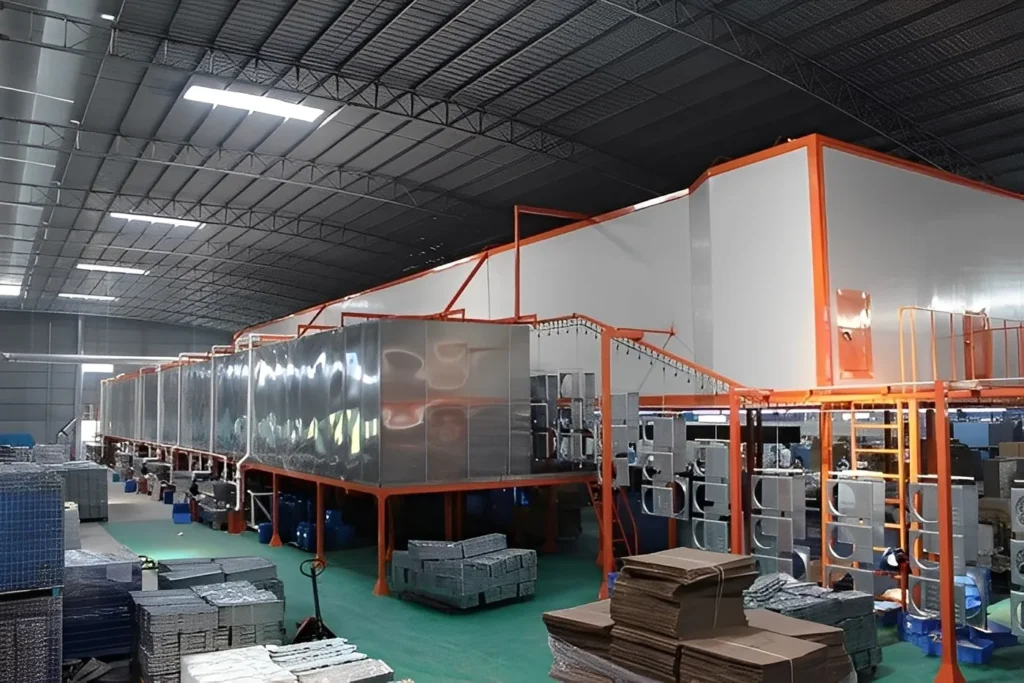
Dive Deeper: How each machine affects coating quality (200+ words)
Here is what each piece of equipment does:
1. Powder coating gun
It charges powder particles so they stick to the metal.
Professional guns allow control of:
- voltage
- micro-amps
- powder flow
- air pressure
This affects coverage, thickness, and smoothness.
2. Spray booth
The booth captures overspray and keeps the environment clean.
Types include:
- recovery booths
- cartridge filter booths
- cyclone systems
A clean booth results in consistent finishes.
3. Curing oven
The oven melts and hardens the coating.
Types:
- electric oven
- gas oven
- infrared oven
Metal temperature must reach the curing schedule—otherwise the coating will be weak.
4. Pretreatment system
This system cleans and protects metal:
- spray wash tunnels
- dip tanks
- manual cleaning stations
Strong pretreatment = strong coating.
5. Air compressor
Powers the spray gun and ensures smooth powder flow.
Oversized or undersized air pressure can cause orange peel or thin spots.
These machines create a complete powder coating line.
How do you prepare metal for powder coating?
Preparation determines 80% of powder coating success.
Metal must be clean, dry, rust-free, and chemically prepared.
Dive Deeper: Best preparation practices (200+ words)
The goals of preparation are:
- remove contamination
- create adhesion
- prevent rust
Here is how to do it:
Degrease
Use alkaline cleaners or solvent wipes.
Rinse
Remove chemical residue.
Etch or sandblast
Create microscopic texture for the powder to grip.
Apply phosphate or ceramic coating
This improves corrosion resistance.
Dry completely
Moisture is the enemy of powder coating.
Preheat (optional)
Preheating helps powder stick more evenly on thick metal parts.
Skipping preparation leads to:
- peeling
- bubbling
- rust
- uneven finish
This is why professional powder coat shops invest heavily in pretreatment systems.
How do you cure metal after applying powder?
Curing is the final and most important step.
Powder coat must reach metal temperature of 160–200°C for 10–20 minutes.
Dive Deeper: Why proper curing determines durability (200+ words)
During curing:
- powder melts
- flows out
- crosslinks into a hard, durable film
Under-curing leads to:
- soft finish
- poor chemical resistance
- poor adhesion
- chalking outdoors
Over-curing leads to:
- discoloration
- brittleness
- loss of gloss
To ensure correct curing:
- use an infrared thermometer
- measure metal temperature, not air temperature
- follow the powder manufacturer’s schedule
Large or thick parts may require preheating to ensure full curing.
Can you powder coat metal at home?
Yes, but you need specific equipment.
You can powder coat at home if you have a small spray gun and a dedicated powder curing oven.
Do not use a household kitchen oven—once powder is cured inside, it can no longer be used for food.
Conclusion
Powder coating metal requires thorough cleaning, proper pretreatment, even powder spraying, and controlled curing. When each step is done correctly, the coating becomes extremely durable, corrosion-resistant, and visually appealing—perfect for both industrial and consumer metal products.
 English
  Malay
Malay  Indonesian
  Russian
  Spanish
  Vietnamese
  Bosnian
  French
  Japanese