
Chrome looks shiny and smooth, so many people think powder coating will not stick to it. But with the right preparation, it works well.
Yes, you can powder coat chrome. You must sand or blast the surface, remove the slick chrome layer, apply proper pretreatment, and then spray and cure the powder as normal.
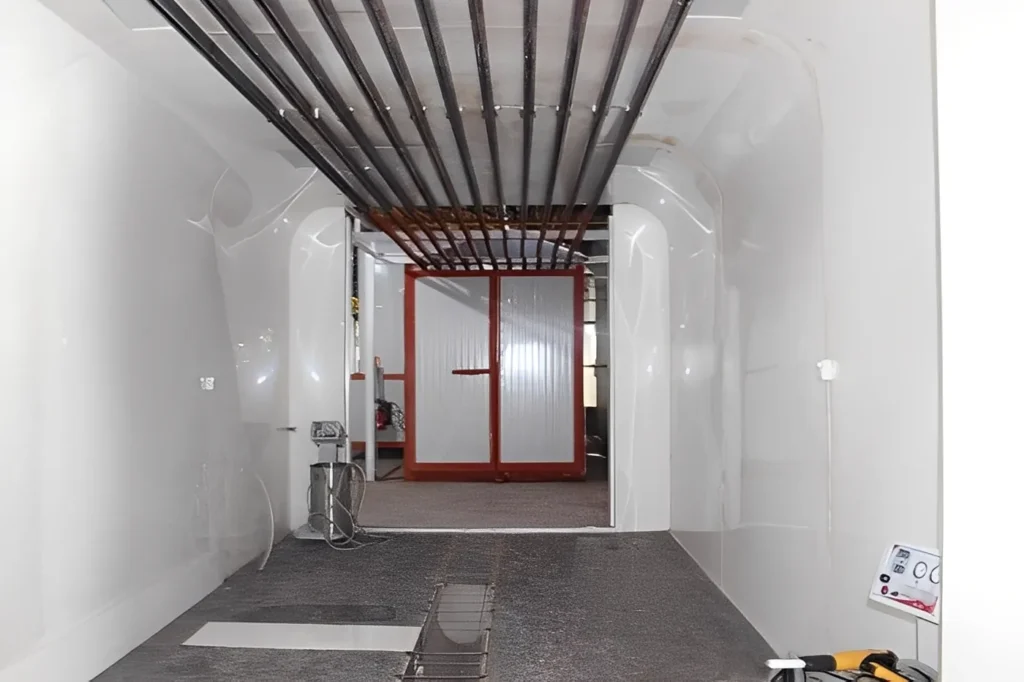
I have powder coated many chrome parts in automotive and motorcycle projects. The key is simple: powder does not bond to glossy chrome, so the surface must be roughened first.
Why chrome must be prepared before powder coating?
Chrome plating is extremely smooth, hard, and reflective. Powder cannot stick to a shiny chrome surface.
Powder coat only adheres to chrome when the surface is sanded, etched, or blasted to remove the slick layer and create grip.
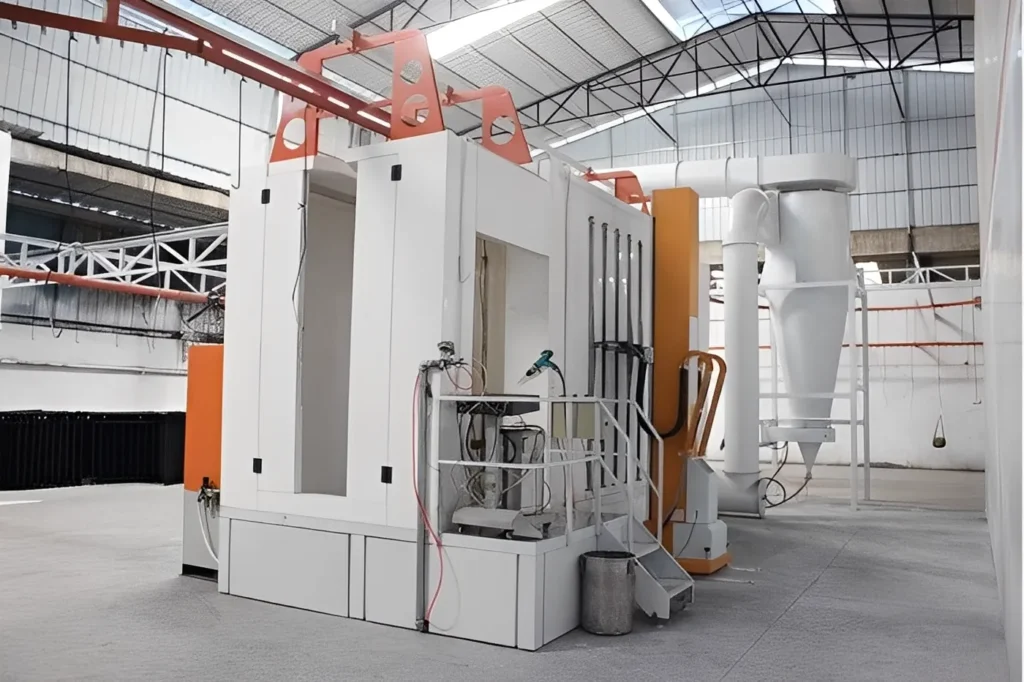
Dive Deeper: Why chrome rejects powder without prep (200+ words)
Chrome is designed to resist corrosion and chemicals. Its surface is:
- Very smooth
- Very hard
- Non-porous
- Low friction
This means powder has nothing to grip during curing. If you try to powder coat directly on chrome:
- The powder slides
- The coating peels
- Edges bubble
- Adhesion fails after a few days
To fix this, you must break the glossy chrome layer and expose a surface the powder can melt into.
You can prepare chrome by:
(1) Sandblasting
This is the most reliable method. It removes the chrome top layer and creates a uniform rough profile.
(2) Mechanical sanding
Using 180–240 grit sandpaper. Slower than blasting but effective on small parts.
(3) Chemical etching
Some shops use acid etch to remove the outer layer.
(4) Stripping the chrome completely
In critical cases, chrome is fully removed to expose nickel or steel beneath.
After preparation, the surface becomes matte and powder can bond during curing.
| Chrome Condition | Powder Adhesion | Result |
|---|---|---|
| Shiny smooth | Very poor | Peeling |
| Lightly sanded | Good | Acceptable |
| Fully blasted | Excellent | Strong coating |
How do you powder coat chrome correctly?
The process is similar to other metals, but the preparation is more demanding.
To powder coat chrome: degrease → sand or blast → clean → apply primer → spray powder → cure.
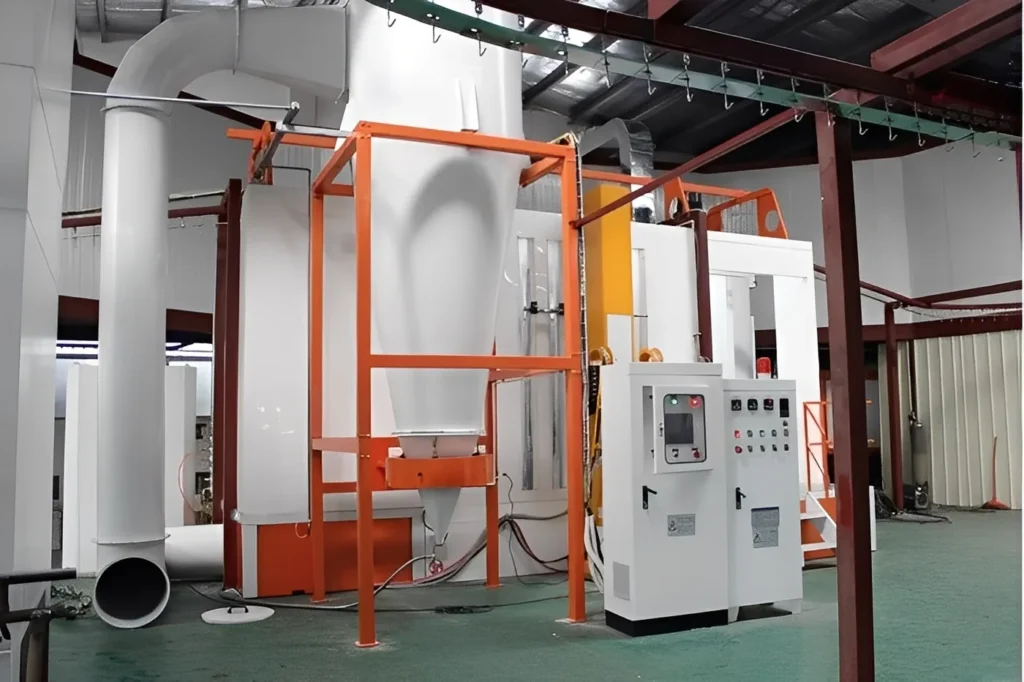
Dive Deeper: Full step-by-step process (200+ words)
Here is the method I use for reliable adhesion:
(1) Clean and degrease
Chrome attracts fingerprints and oil easily.
- Wash with soap or degreaser
- Remove wax and polish residue
Oil prevents adhesion.
(2) Sandblast or sand the chrome
This is the most important step.
- Use abrasive blasting for large or durable parts
- Sand manually for small items
- Remove the mirror shine entirely
The goal is a uniform matte surface.
(3) Apply adhesion primer
Use:
- Epoxy primer
- Chrome-bonding primer
- Etch primer
Primer helps powder bond to slick or difficult metals.
(4) Spray powder coating
Recommended settings:
| Parameter | Value |
|---|---|
| Voltage | 55–75 kV |
| Gun distance | 15–25 cm |
| Flow | Medium |
| Grounding | <1 MΩ |
Chrome parts need strong grounding.
(5) Cure at correct metal temperature
Chrome heats differently than steel.
Cure range: 160–200°C, depending on powder type.
Always check the metal temperature, not just the oven air temperature.
(6) Cool naturally
This prevents stress and cracking.
What problems happen when powder coating chrome?
Chrome is one of the trickiest surfaces to coat.
Common issues include peeling, fish-eyes, under-cure, and poor adhesion.
Dive Deeper: Reasons and solutions (200+ words)
Chrome failures almost always come from inadequate surface preparation.
(1) Peeling or flaking
Cause: surface too smooth
Fix: sandblast until matte
(2) Fish-eyes or craters
Cause: oil, polish, silicone wax
Fix: deep degreasing
(3) Bubbling
Cause: trapped compounds under chrome
Fix: remove chrome more aggressively
(4) Weak adhesion after curing
Cause: poor primer or under-sanding
Fix: use an epoxy or etching primer
(5) Uneven finish
Cause: wrong spray angle or high voltage
Fix: lower voltage and adjust gun distance
Below is a summary:
| Defect | Cause | Solution |
|---|---|---|
| Peeling | Glossy chrome | Sand/Blast |
| Craters | Oil contamination | Clean again |
| Bubbles | Layer separation | Strip chrome |
| Soft coat | Low metal temp | Adjust curing |
| Thin edges | High voltage | Lower kV |
Should chrome be fully removed before powder coating?
Sometimes yes, sometimes no.
If chrome is thin and easy to roughen, you can powder coat on top. If chrome is thick or peeling, it must be removed completely.
Good candidates:
- Motorcycle parts
- Car trim
- Furniture hardware
Bad candidates:
- Flaking chrome
- Rust under chrome
- Deeply pitted plating
If plating is unstable, powder coating will fail too.
Conclusion
Yes, you can powder coat chrome. Roughen the surface, clean thoroughly, apply the right primer, and cure the powder correctly. When prepared carefully, chrome parts can hold a strong and durable powder-coated finish.
 English
  Malay
Malay  Indonesian
  Russian
  Spanish
  Vietnamese
  Bosnian
  French
  Japanese