
Galvanized steel is strong, corrosion-resistant, and widely used in construction and outdoor products. Many people wonder if it can be powder coated, since the zinc layer behaves differently from regular steel.
Yes, you can powder coat galvanized steel — but only if the surface is properly prepared to remove oils, reduce zinc oxide, and create a profile for the powder to adhere.
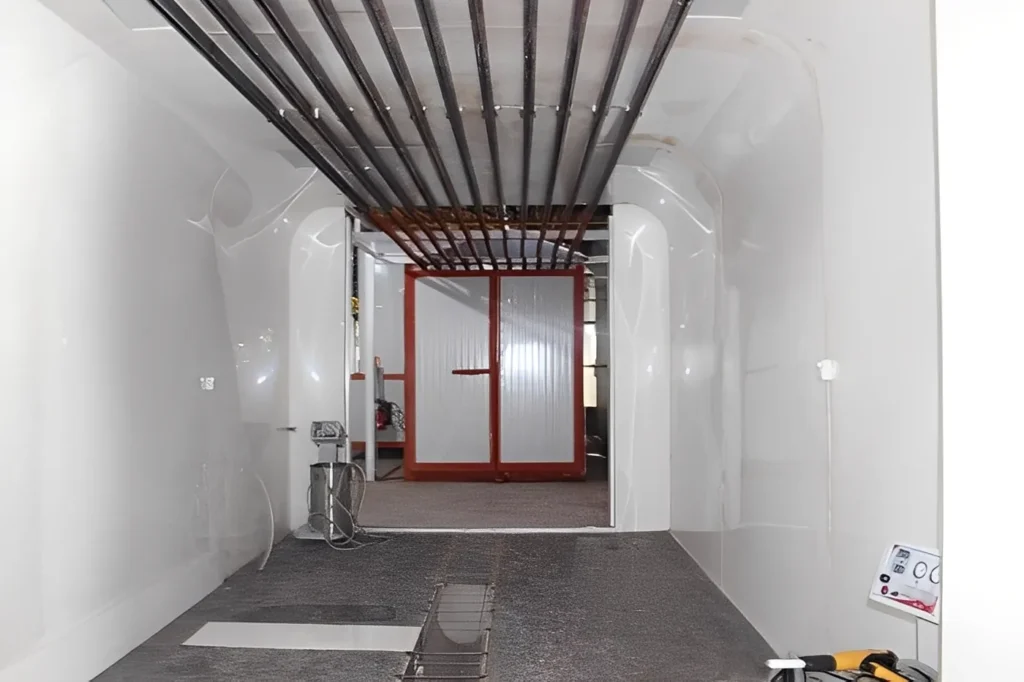
I have worked with factories producing fences, outdoor furniture, handrails, and structural parts made from galvanized steel. When the preparation is done correctly, powder-coated galvanized steel achieves excellent durability and long-term weather resistance.
Can you apply powder coating directly to galvanized steel?
Technically, yes — but it requires more preparation than ordinary steel.
Galvanized steel can be powder coated if the zinc surface is cleaned, degreased, slightly etched, and stabilized to prevent outgassing.
Dive Deeper: Why galvanized steel is harder to powder coat (200+ words)
Galvanized steel has a protective zinc layer created through hot-dip galvanizing or electro-galvanizing. This zinc layer is great for corrosion resistance, but it causes unique challenges when powder coating:
Problem 1: Outgassing
Heat from curing (160–200°C) can cause trapped gases inside the zinc layer to escape.
This leads to:
- pinholes
- bubbles
- craters
- poor adhesion
Problem 2: Zinc oxide formation
Galvanized steel quickly forms zinc oxide on the surface.
Powder does not bond well to this powdery, unstable layer.
Problem 3: Surface smoothness
Galvanized steel is often too smooth, so powder cannot grip strongly unless the surface is roughened.
Problem 4: Oils and passivation layers
New galvanized steel is often coated with:
- lubricants
- passivation oils
- anti-rust chemicals
These prevent proper adhesion unless removed.
Even with these challenges, powder coating galvanized steel works very well when the proper pretreatment steps are followed.
| Challenge | Effect on Powder Coat | Solution |
|---|---|---|
| Outgassing | Pinholes, bubbles | Pre-bake metal |
| Zinc oxide | Weak adhesion | Etching or blasting |
| Smooth surface | Poor mechanical bond | Light blasting |
| Passivation oils | Fish-eye defects | Strong degreasing |
How do you powder coat galvanized steel correctly?
The key to success is thorough surface preparation.
Correct method: degrease → rinse → etch or blast → pre-bake → powder coat → cure.
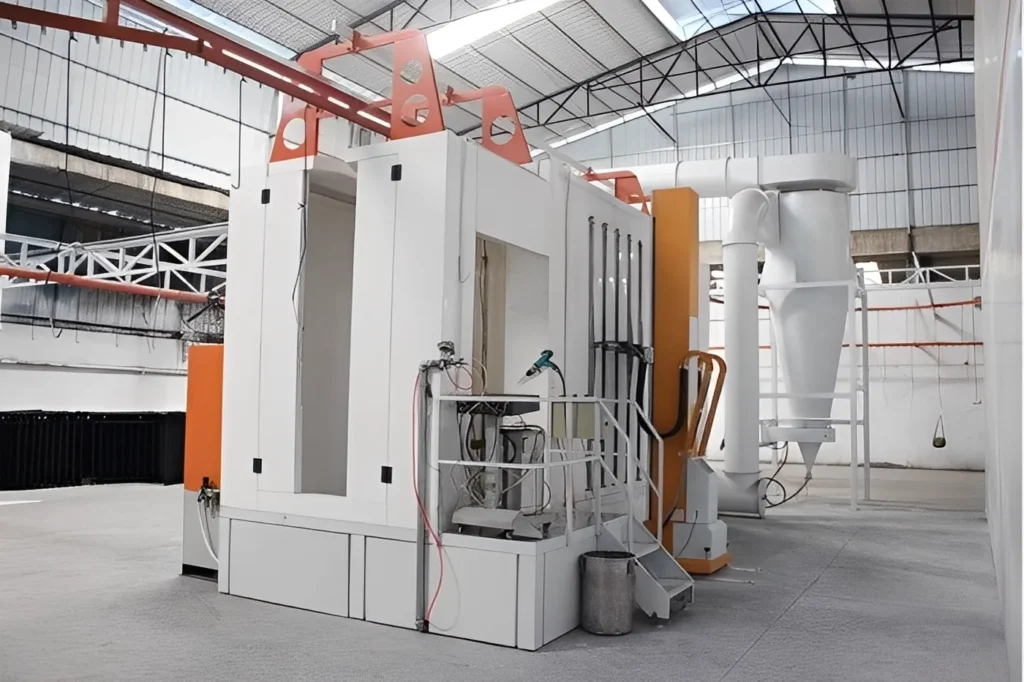
Dive Deeper: Step-by-step powder coating process (200+ words)
Below is the standard industrial preparation process:
1. Degreasing
Remove all oils, dirt, passivation chemicals, and residues.
Use:
- alkaline cleaner
- solvent wash
- hot water cleaning
Any residue will cause adhesion failure.
2. Rinse thoroughly
To remove chemical cleaners and ensure a clean surface.
3. Etching or surface roughening
Powder adheres better when the surface has a slight profile.
Recommended methods:
- Light sandblasting
- Sweep blasting with low pressure
- Acid etching (phosphoric or chromic acid)
- Mechanical abrasion
Avoid aggressive blasting — it can damage the zinc layer.
4. Pre-bake (outgas relief)
Heat the metal before applying powder to release trapped gases.
Typical pre-bake:
- 170–200°C
- 20–30 minutes
This dramatically reduces pinholes.
5. Apply powder coating
Use powders designed for galvanized steel, especially:
- Polyester powder (best outdoor durability)
- Super-durable polyester
- Hybrid powders (for indoor use)
Spraying Tip: Use moderate voltage to avoid uneven wrap.
6. Cure properly
Curing time and temperature must follow the powder manufacturer’s metal temperature chart.
Incorrect curing leads to:
- weak adhesion
- poor corrosion resistance
- surface defects
Why powder coat galvanized steel?
When done correctly, powder coating significantly improves galvanized steel’s performance.
Powder coating adds color, durability, scratch resistance, and UV stability on top of the zinc’s corrosion protection.
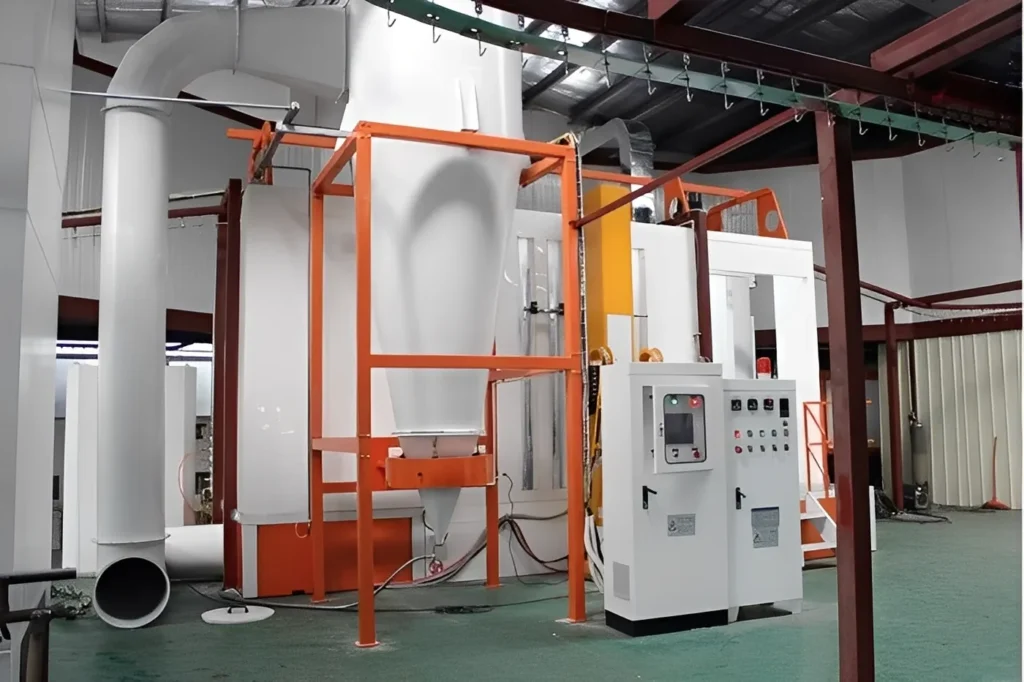
Dive Deeper: Combined benefits of zinc + powder coating (200+ words)
Powder coating and galvanizing together create a system known as duplex coating.
This system offers:
- superior corrosion resistance
- improved impact strength
- improved weather protection
- enhanced appearance
The two layers protect each other:
- Zinc protects steel from rust.
- Powder coat protects zinc from UV degradation and oxidation.
The combined life expectancy is much longer than each layer alone.
In outdoor environments, duplex systems often last 25–30+ years.
Other advantages:
- Color customization
- Texture options (matte, gloss, wrinkle)
- Better abrasion resistance
- Reduced maintenance
- Improved resistance to chemicals and salt spray
This is why galvanized steel with powder coating is common in:
- Fences
- Gates
- Outdoor structures
- Lighting poles
- Balcony railings
- Playground equipment
- Commercial and industrial frames
The duplex system excels in harsh climates.
When should you NOT powder coat galvanized steel?
Powder coating galvanized steel may fail if:
- The zinc surface is extremely new (less than 24 hours old)
- Passivation chemicals were not removed
- Surface is too shiny or smooth
- No pre-bake was performed
- The part contains moisture
- Heavy rust is present around welds
- Thick wet zinc lumps (drips) are visible
Shiny “spangle finish” galvanized steel often needs extra roughening to ensure adhesion.
Dive Deeper: Situations that cause failure (200+ words)
If galvanized steel is fresh from the hot-dip tank, surface oils and reactive zinc can cause:
- adhesion failure
- fish-eye defects
- bubbles
- powder flaking over time
It is better to let new galvanizing age (“weather”) for:
- 24–48 hours minimum
- 2–4 weeks is ideal
If the galvanized layer has thick drips or rough patches, sanding or grinding is necessary before coating.
Avoid powder coating galvanized steel that is:
- poorly welded
- contaminated with flux
- deeply rusted prior to galvanizing
- excessively uneven
All these problems can transfer through powder coating and cause long-term failure.
Conclusion
Yes, you can powder coat galvanized steel, but proper preparation is essential. When cleaned, etched, pre-baked, and powder coated correctly, galvanized steel becomes incredibly durable and long-lasting. The combination of zinc protection + powder coating creates one of the strongest corrosion-resistant systems available.
 English
  Malay
Malay  Indonesian
  Russian
  Spanish
  Vietnamese
  Bosnian
  French
  Japanese