
Stainless steel looks clean and strong, but many engineers wonder if powder coating can bond well to such a smooth and corrosion-resistant surface.
Yes, you can powder coat stainless steel. You must clean it, remove surface shine, apply the right pretreatment, and cure the powder evenly so it bonds strongly and stays durable.
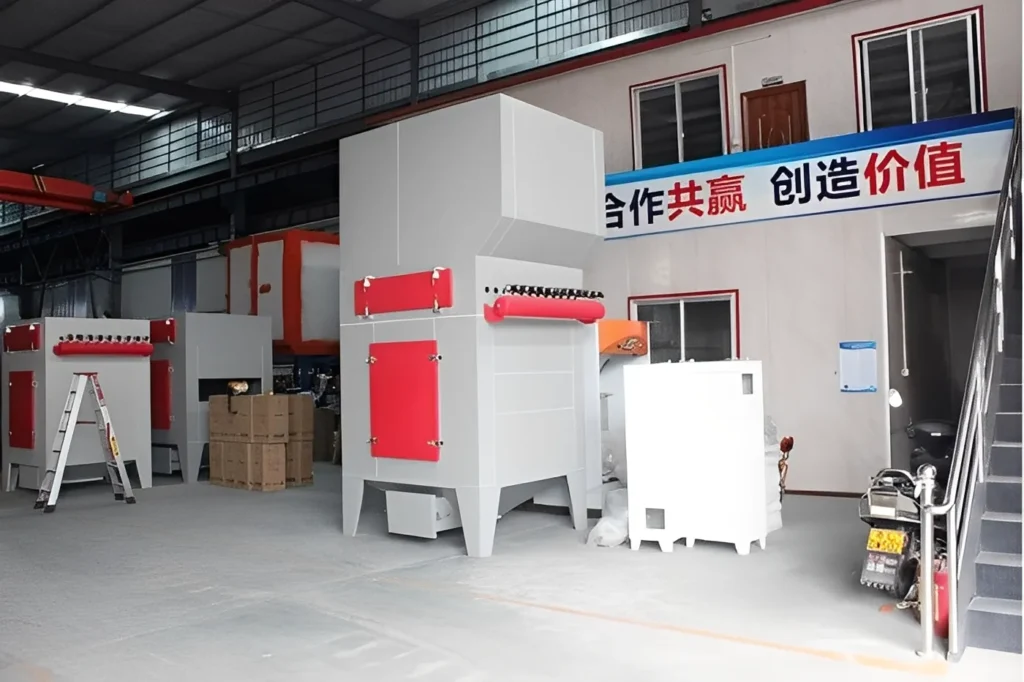
I coat stainless steel often for industrial equipment, kitchen fixtures, and outdoor structures. I learned that stainless steel accepts powder coating well when the surface gets the right preparation.
Why can stainless steel be powder coated?
Stainless steel is smooth and corrosion-resistant, so the surface needs extra preparation to help the powder bond tightly.
Stainless steel can be powder coated because mechanical sanding and chemical pretreatment create the surface profile the powder needs to anchor and cure into a strong finish.
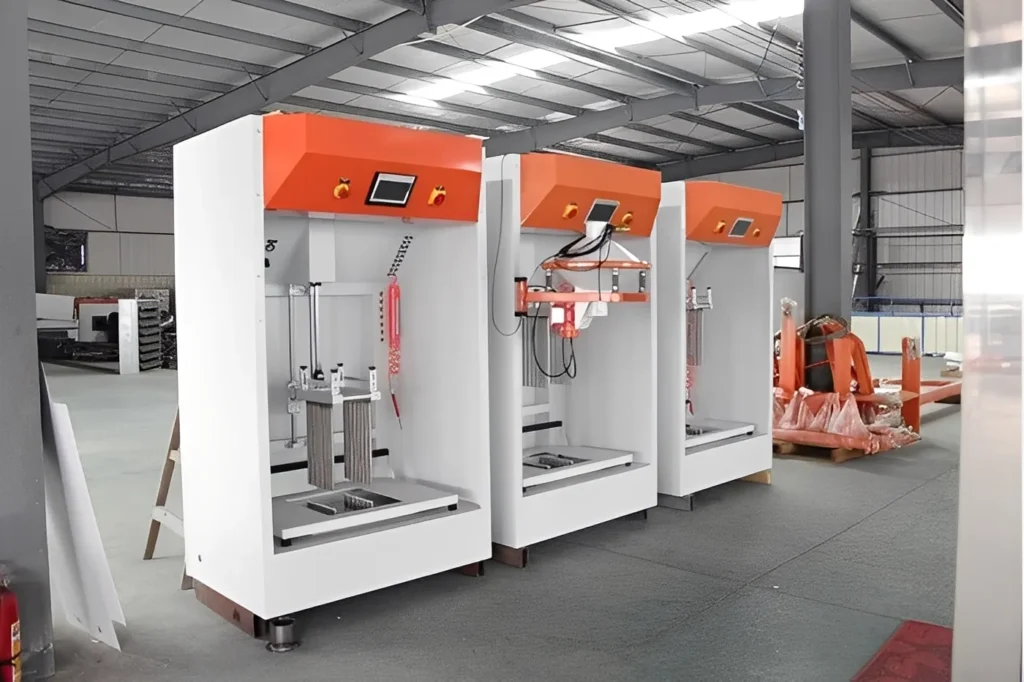
Dive Deeper: Why stainless steel behaves differently
Stainless steel is not like plain steel. It has a chromium-rich surface that protects it from rust. This surface layer is smooth, dense, and hard to penetrate. Powder coat cannot grip well unless the surface gets roughened.
The first challenge is low surface energy. Stainless steel does not bond well with coatings unless the surface is opened. Sanding or light blasting creates small scratches. These scratches give the melted powder something to grip during curing.
Another challenge is contamination. Stainless steel often carries oils or polishing compounds from manufacturing. These oils block the powder from attaching. I always clean stainless steel with a degreaser or alcohol before coating.
Pretreatment also matters. Stainless steel can use adhesion promoters or conversion coatings to increase bonding. Some factories skip pretreatment because stainless steel does not rust. But pretreatment is not only about rust. It is also about adhesion strength.
Curing is also different. Stainless steel heats slower than aluminum but faster than some steels. This changes oven timing. If the metal does not heat fully, the powder undercures and weakens.
Below is a simple table that explains why stainless steel needs special steps:
| Challenge | Effect | Solution |
|---|---|---|
| Smooth surface | Weak adhesion | Sanding or blasting |
| Surface oils | Poor bonding | Degreasing |
| Chromium oxide layer | Hard to grip | Chemical pretreatment |
| Different heating rate | Uneven curing | Adjust oven settings |
With the right preparation, stainless steel becomes a great base for powder coating.
How do you powder coat stainless steel correctly?
Successful coating requires cleaning, sanding, pretreating, spraying, and curing with stable temperature control.
To powder coat stainless steel, you roughen the surface, clean it, apply a suitable pretreatment, spray with balanced gun settings, and cure at the correct temperature.
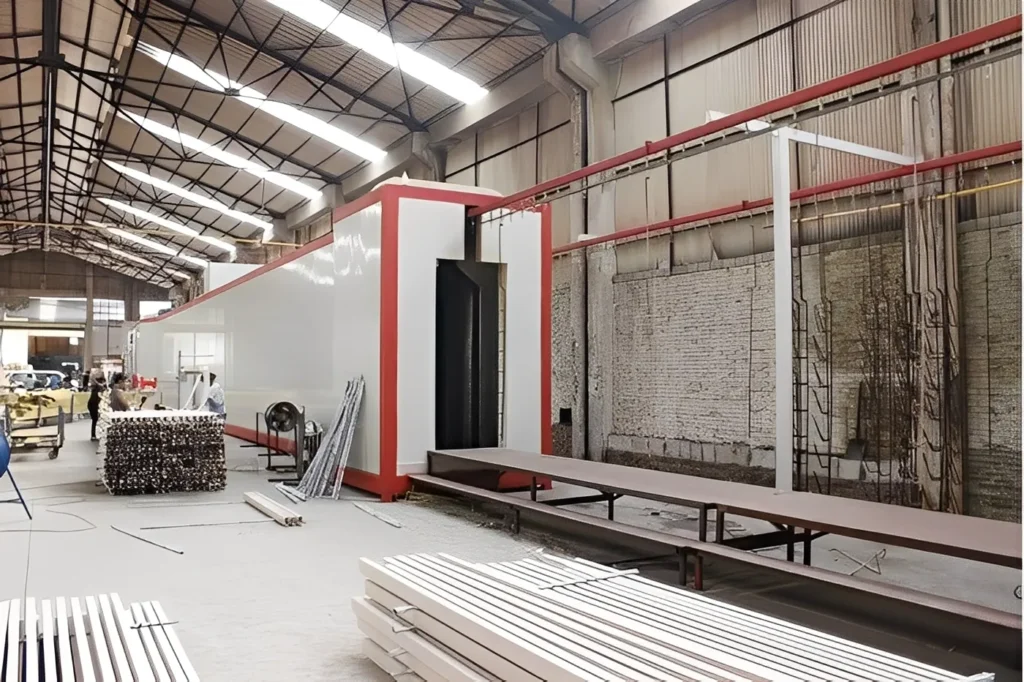
Dive Deeper: Step-by-step process based on real projects
I use the same structured method every time I coat stainless steel. These steps prevent peeling and keep the finish durable.
(1) Clean the surface
Remove oils, fingerprints, and polishing compounds. Stainless steel sometimes carries invisible grease. I wash with a degreaser, then rinse and dry.
(2) Sand or lightly blast the surface
This is the most important step. Stainless steel must lose its mirror-like shine. I use 180–220 grit sandpaper or light abrasive blasting. The goal is a uniform, dull surface. This mechanical profile helps the powder attach.
(3) Apply pretreatment
Some factories use an adhesion promoter. Others use a phosphate or chrome-free chemical to increase bonding. This step is optional but improves long-term performance, especially outdoors.
(4) Spray the powder
Spraying stainless steel is similar to spraying steel or aluminum. The part must be grounded well. I use medium voltage (60–90 kV) to get good wrap-around. Stainless steel attracts powder well once the surface is roughened.
(5) Cure with stable temperature
Stainless steel must reach the correct metal temperature. Most powders cure around 160–200°C. I monitor the part temperature with a probe during the first run. Stainless steel heats evenly, but thick parts need more time.
(6) Cool naturally
Cooling stabilizes the coating. I avoid fast cooling because it can change gloss or strain the coating.
Below is a clear process table:
| Step | Action | Why It Matters |
|---|---|---|
| Clean | Remove oils | Better adhesion |
| Sand | Add surface profile | Powder grips better |
| Pretreat | Improve bonding | Stronger coating |
| Spray | Apply charged powder | Smooth, even layer |
| Cure | Heat to correct temp | Hard protective finish |
| Cool | Let coating harden | Stable surface |
This process gives stainless steel a clean, durable, and uniform finish.
What problems appear when powder coating stainless steel?
Most issues come from poor surface preparation or uneven curing.
Common problems include peeling, chipping, uneven texture, fisheyes, and undercured powder caused by smooth surfaces or wrong oven tuning.
Dive Deeper: Why defects appear and how to prevent them
I see the same defects in many workshops. The cause is almost always surface preparation or curing control.
Peeling
This happens when the surface is too smooth. Stainless steel must be sanded or blasted. Powder coat cannot grip a glossy surface.
Fisheyes or bumps
These appear when oil or polishing compound stays on the surface. Stainless steel needs careful cleaning.
Uneven texture
This happens when the powder is sprayed too heavy or when airflow disturbs the cloud. Balanced spray settings solve this.
Poor adhesion in outdoor use
Outdoor stainless steel needs pretreatment. Otherwise, the powder may lift over time.
Undercured finish
Stainless steel heats slower in thick parts. If the metal never reaches full cure temperature, the coating stays soft.
A quick defect guide:
| Defect | Cause | Fix |
|---|---|---|
| Peeling | No sanding | Roughen surface |
| Fisheyes | Oil contamination | Clean thoroughly |
| Texture issues | Over-spray | Lower powder flow |
| Poor outdoor adhesion | No pretreatment | Add promoter or conversion coat |
| Soft coating | Undercuring | Adjust oven settings |
Once these issues are controlled, stainless steel coatings become stable and long-lasting.
Conclusion
Yes, you can powder coat stainless steel when you clean, sand, pretreat, spray, and cure the surface with simple and stable steps.
 English
  Malay
Malay  Indonesian
  Russian
  Spanish
  Vietnamese
  Bosnian
  French
  Japanese